Well it wasn’t really that bad – the former was quick to do, just got tricky getting the length correct, because no amount of maths really works that well in blacksmithing – the hot forged steel has so many variables. Since this is the first blog I will quickly say – wrought iron / steel? Since Bessemer invented his converter in the 1850’s wrought iron, slow and skilled to make, began a long decline, production in this country finally fading out in the 1930’s ( somebody pull me up on that date if I am wrong!). The Victorians had about twelve grades of wrought iron – the more layers the better – like baklava. Today what is mostly available as scrap are the lower quality grades, so if it’s cracking, splitting, red shorting on you and you want to throw it at the wall that might be why! But it’s great for some things.
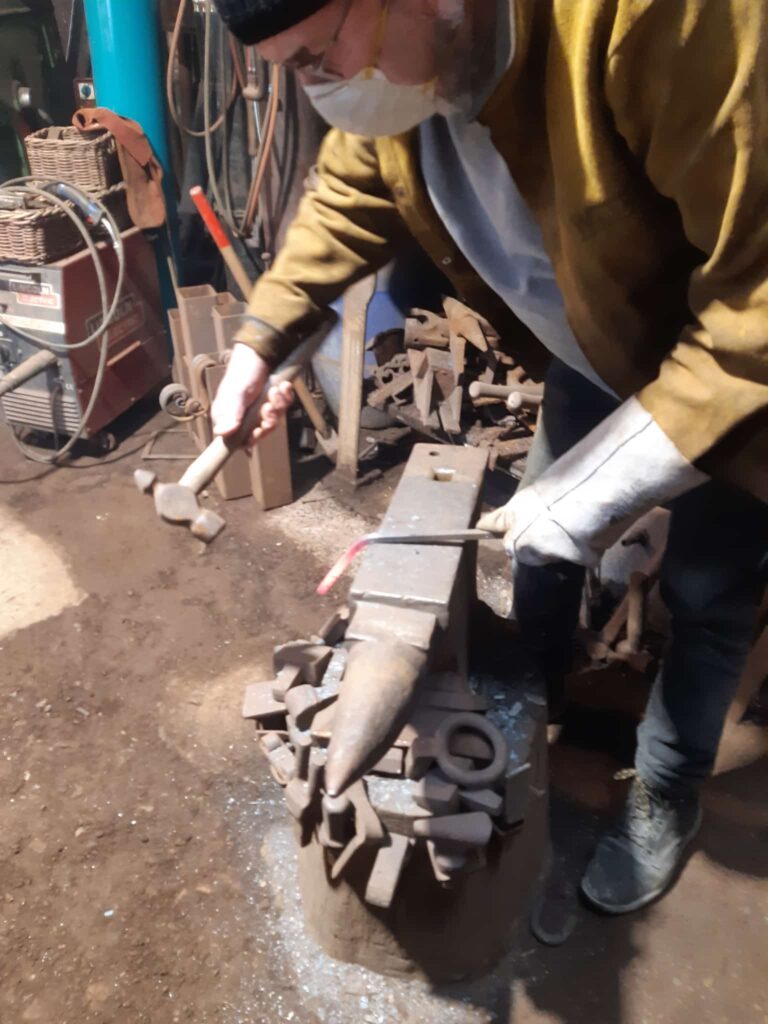
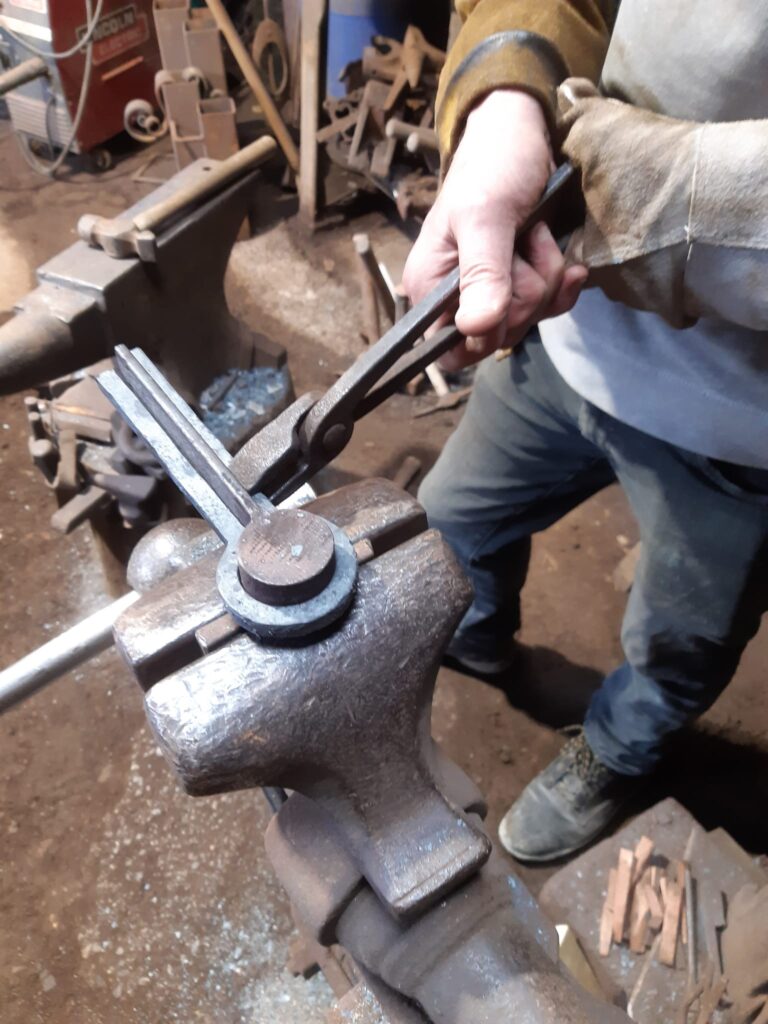
First Tim has to forge two square corners 147 mm o/s to o/s. cooling in the slack tub and hammering first down onto the anvil and then with the other side clamped in the leg vice.
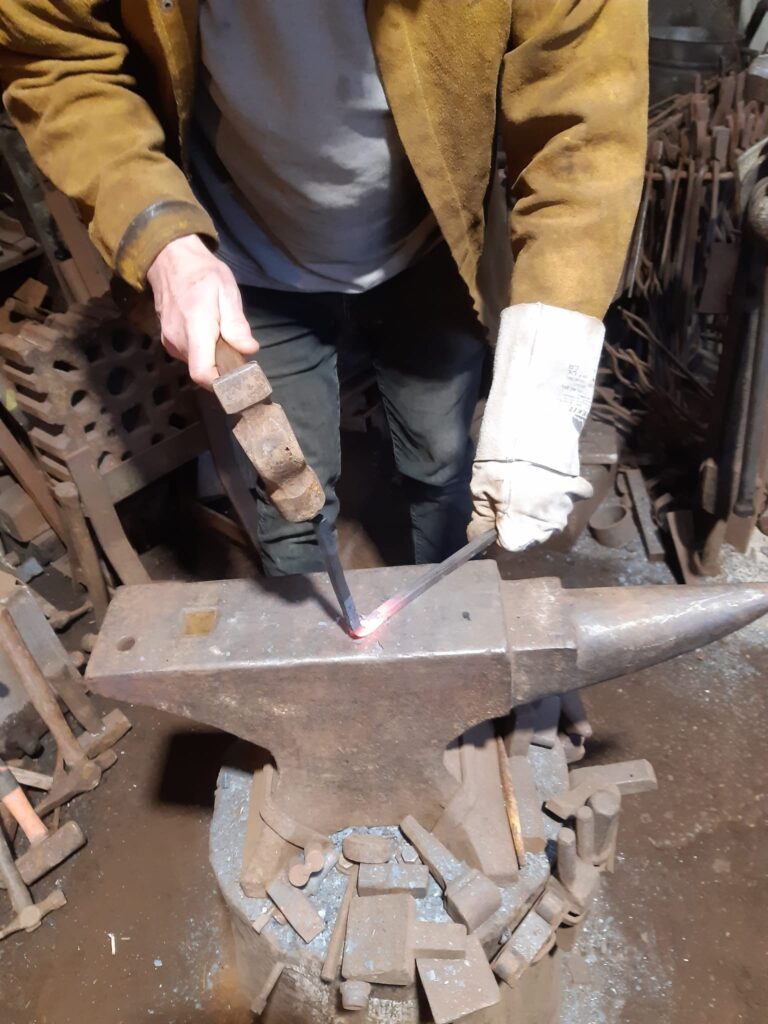
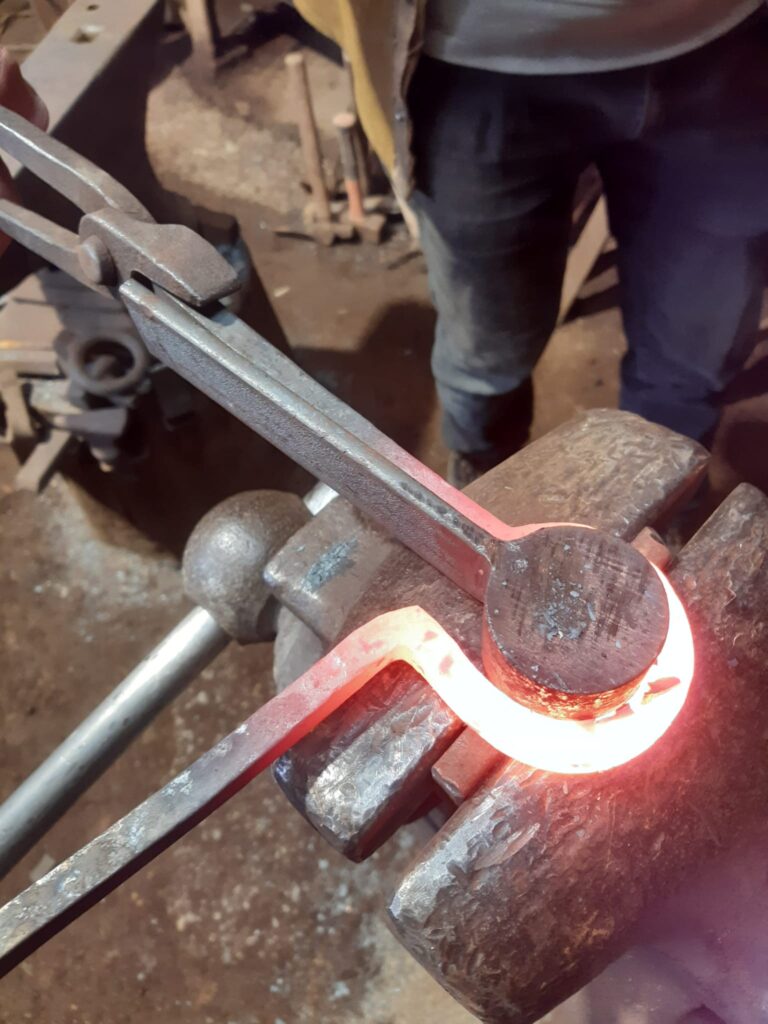
Then the two of us – you can also do it single handed, pulled, tapped and talked it into going round the former while keeping the corners cold. We mocked this photo up later and did not quench the corner!
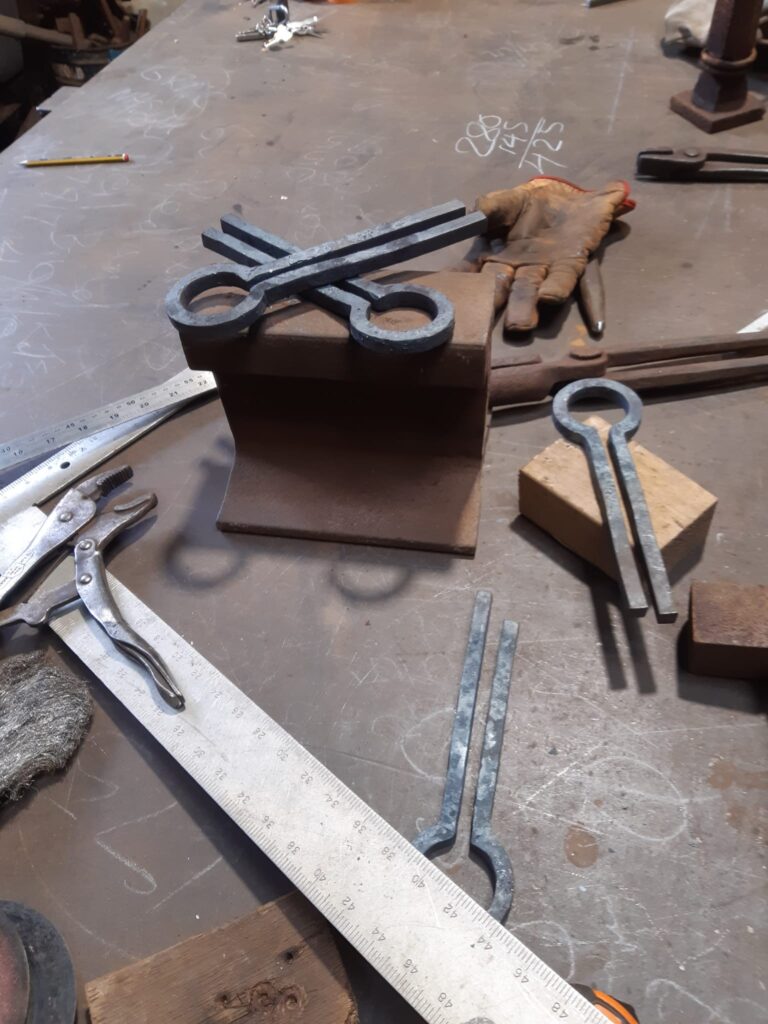
This is where the length was critical. 145mm and we could persuade it into that second corner but it wasn’t as good as it could be, 149mm and we might have done it, but probably messy! 147 mm was just right. In these photos you see the finished articles.
What are they for? I need to ask Tim if I can tell you. One thing I can say is the box of pieces he has made over the weeks is getting heavier!
He is a stickler for tradition and is keeping my nose to the grindstone on that! No sneaky MIG welds allowed, hammer, vice and anvil only – so far anyway.
I hope you enjoyed this and talk to you next time! Fred